Neuralink Wants to Mass-Produce Brain Implants. Here’s the Engineering Challenge.
From ultra-thin electrode threads to moisture barriers and manufacturing yield, scaling brain implants demands more than a working prototype.
Explore embedded systems and electronics engineering across edge AI, medical devices, autonomous systems, smart infrastructure, hardware security, sensors, processors, communications, reliability, and power-constrained electronic products.

From ultra-thin electrode threads to moisture barriers and manufacturing yield, scaling brain implants demands more than a working prototype.

Inside the infrared, capacitive, optical, and ultrasonic hardware your phone uses to recognize you — and why biometric authentication sometimes fails.

How LEDs, photodiodes, and analog electronics turn reflected light into a heartbeat, and where the measurement breaks.
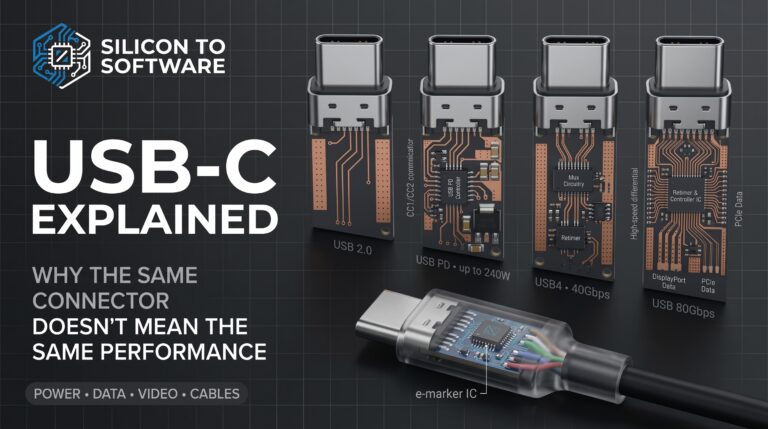
CC pins, e-marker chips, PD negotiation, and PCB signal integrity — the real engineering behind USB-C compatibility.

Inside the microphone-to-driver signal path, the destructive-interference mechanism, and the latency wall that keeps active noise cancellation from ever reaching perfect silence.
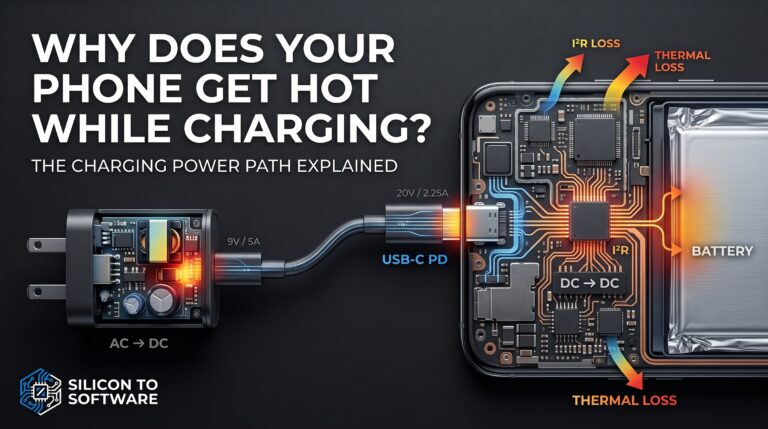
A stage-by-stage engineering breakdown of AC-DC conversion, USB-C PD negotiation, charger-IC efficiency, and battery internal resistance — and why a charger’s wattage rating tells you almost nothing about how hot your phone will get.
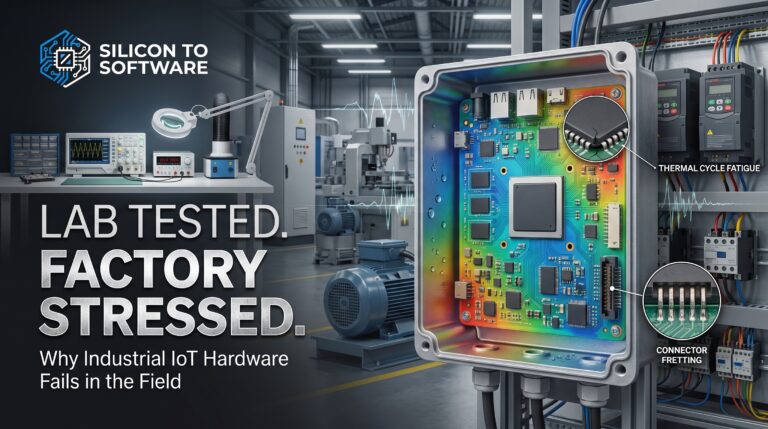
Thermal cycling, connector fretting, moisture, and electrical noise turn ordinary design decisions into industrial failure modes — here’s the engineering behind each one.

Autonomous vessels rely on far more than artificial intelligence. They require radar, LiDAR, machine vision, edge computing, satellite communications, cybersecurity, and redundant control systems to safely navigate the world’s busiest shipping lanes.

Tiny batteries, optical waveguides, AI processors, thermal limits, antennas, cameras, sensors, and advanced semiconductor packaging remain the biggest engineering barriers to replacing today’s smartphone.
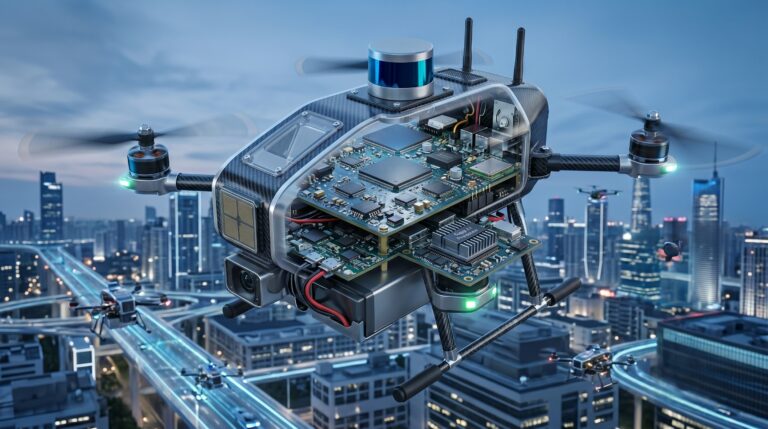
Delivery drone safety hardware is the only thing standing between a 10-pound autonomous aircraft and your neighborhood. From redundant flight controllers and AI-powered obstacle detection to aviation-grade sensors and battery safety systems — here’s the engineering keeping delivery drones safe in crowded skies.