An emerging technology can be scientifically interesting long before it becomes useful at scale. Between a working experiment and a dependable product sit questions about measurement, manufacturing, cost, integration, and maintenance. Understanding those questions is more useful than deciding whether a technology will change everything or disappear.
This hub examines new computing approaches, communications hardware, and unfamiliar ways to connect people with machines. It is for readers who follow research announcements, engineers exploring adjacent fields, and decision-makers who need to distinguish technical progress from a commercial forecast. The aim is not to dismiss ambitious work, but to identify what has actually been demonstrated and what still needs to be solved.
Separate the result from the roadmap
A demonstration establishes something under particular conditions. It might show a physical effect, a functioning component, or a small integrated system. Those are meaningful achievements, but they answer different questions. An experiment does not automatically establish repeatability, useful lifetime, production yield, or competitiveness with existing alternatives.
When reading a claim, identify the baseline and the measurement boundary. Was a new device compared with a complete conventional system or a single component? Were preparation, cooling, error handling, and readout included? These questions help explain why apparently conflicting performance claims can both describe real observations.
New computing still needs a surrounding system
Quantum and biological computing use different physical mechanisms from conventional digital processors. Neither should be treated as a faster drop-in replacement for every task. The usefulness of a computing approach depends on which problems it addresses and the resources required to prepare inputs, run operations, and interpret outputs.
The supporting hardware matters. Control electronics, interfaces, environmental conditions, and error management can dominate an implementation. For a new computing method, ask which tasks remain on conventional machines and how data moves between the two. That boundary often reveals more than a headline about the computing element alone.
Deployment changes the problem
A communications concept needs more than a promising radio experiment. Antennas, packaging, board materials, spectrum availability, network architecture, power consumption, and infrastructure investment influence deployment. Potential capability and a practical service are different milestones.
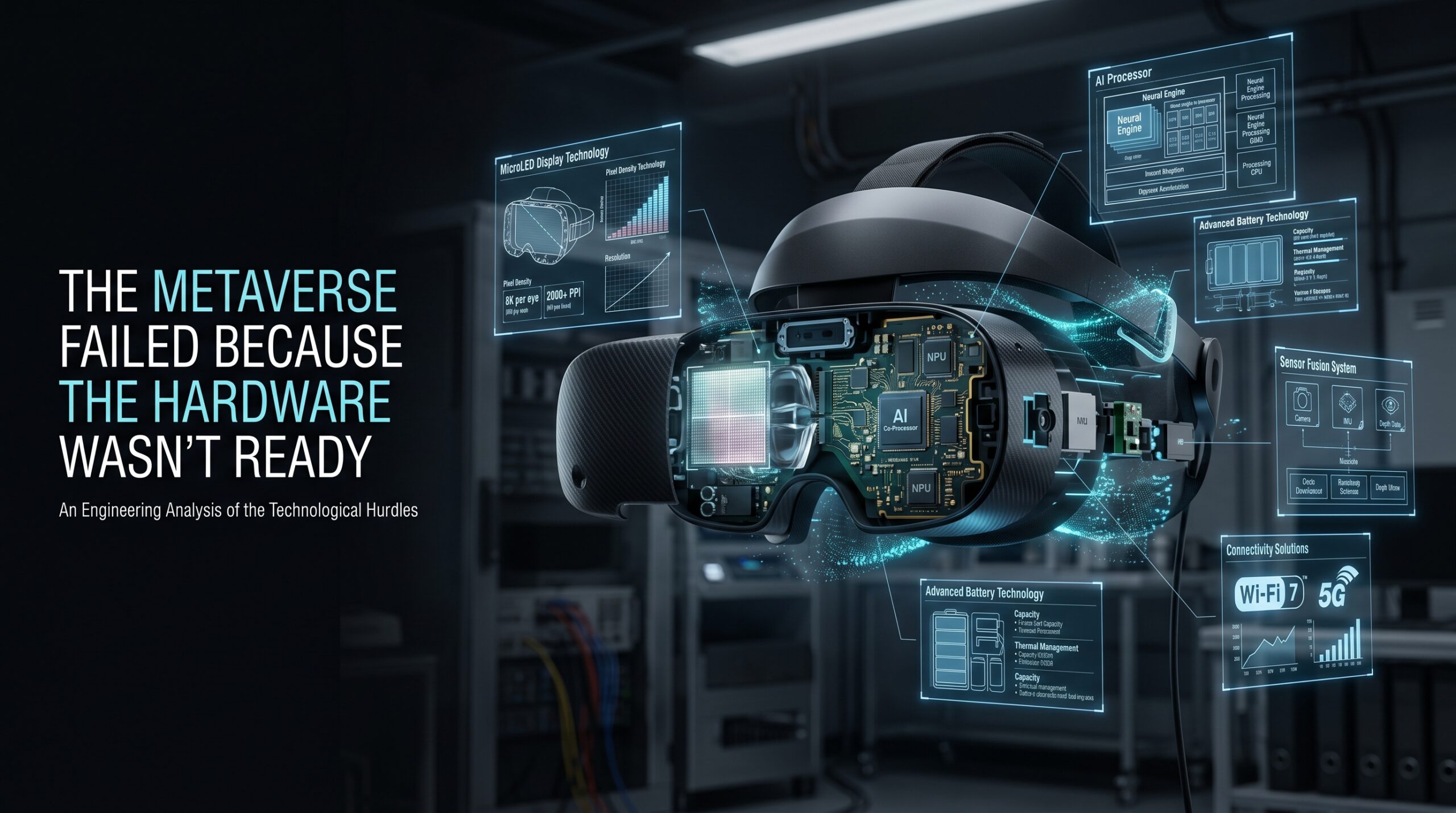
Spatial computing makes a similar point at a human scale. Displays, optics, batteries, processors, sensors, comfort, and heat share a limited physical envelope. Improving one feature may worsen another. A useful product has to balance the complete experience, not maximize a single component specification.
Read timelines as conditional statements
Research schedules are not delivery guarantees. Progress may depend on a manufacturing process, a material supply chain, a standard, or a supporting technology that is not ready. A delayed product does not necessarily invalidate the underlying science; it may show that integration was harder than expected.
Security planning needs particular care. Future quantum capability is uncertain, but long-lived systems may require preparation well before a threat becomes practical. The right response is a structured assessment of data lifetimes, cryptographic dependencies, and migration options, rather than treating every encryption method as equally affected.
Start here: a curated reading path
- Explore an unfamiliar computing medium — Start with the distinction between an interesting biological mechanism and a computing system with controllable inputs, outputs, and repeatable operation.
- Understand the security motivation — Read for the relationship between quantum computing and cryptographic assumptions, while keeping future capability distinct from present deployment.
- Follow a concept into infrastructure — Use next-generation wireless as an example of how components, materials, networks, and standards must progress together.
- Study the product integration problem — Consider how display quality, comfort, energy use, and cost can determine adoption even when individual technologies function.
- Connect emerging ideas to existing products — This adjacent embedded-systems reading makes future security questions concrete for devices with constrained resources and long support lives.
Put the ideas to work
For the next research announcement you read, make two columns: demonstrated and still required. Include manufacturing, reliability, and the supporting infrastructure in the second column. This simple separation makes it easier to appreciate real progress without turning a promising experiment into an unsupported forecast.
Frequently asked questions
Does emerging mean commercially available?
No. A technology may be in basic research, prototype development, limited deployment, or early production. State the stage before comparing it with established products.
Will quantum computers replace ordinary computers?
They are being developed for particular classes of problems. Conventional computing remains important for general workloads and the supporting control system.
How should I evaluate a breakthrough headline?
Look for the measured result, test conditions, comparison baseline, and unresolved integration steps. Treat projections separately from demonstrated capability.