Silicon to Software is where hardware meets intelligence — a publication built for engineers, tech professionals, and curious minds who want to understand the physical infrastructure behind the AI revolution.
Table of Contents
Most tech writing covers software, apps, and algorithms. I have spent over 20 years in PCB electronics manufacturing — working in technical sales and serving some of the world’s leading tech companies on the front lines of hardware procurement and supply chain decisions. That experience is the foundation of everything published here.
Who Is Behind Silicon to Software
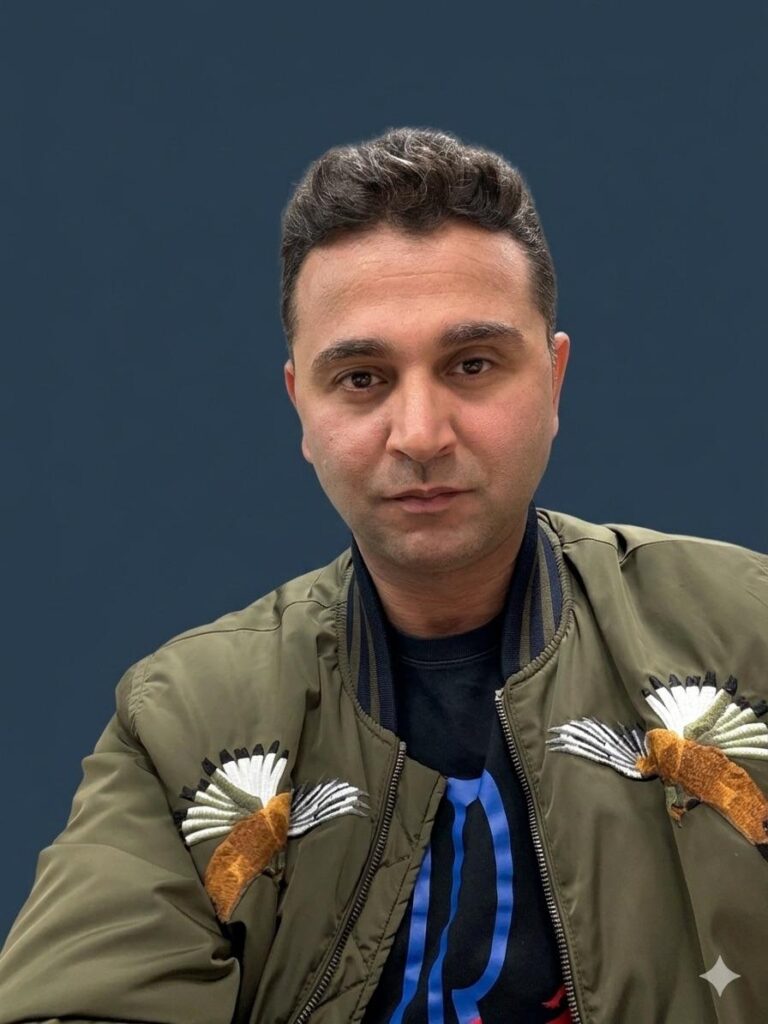
I’m Imran Valiani, a Sales Director in PCB electronics manufacturing based in the Bay Area. My vantage point is unique — not as an engineer on the bench, but as someone who has spent two decades negotiating, sourcing, and selling the hardware that makes modern technology actually work.
I have watched AI go from a niche research topic to the dominant force reshaping global supply chains, power grids, chip architectures, and manufacturing floors. Most of that transformation happens at the hardware level — in the PCBs, the silicon, the data centers, and the assembly lines. Very few writers cover that world from the inside.
Silicon to Software is where I translate that insider knowledge into content anyone in tech can understand and use.
What Silicon to Software Covers
Silicon to Software examines the engineering and physical infrastructure behind modern technology. Topics include:
- PCB design and signal integrity — high-speed design, materials, manufacturability, reliability, and the physical constraints behind modern electronics.
- PCB and electronics manufacturing — fabrication, assembly, DFM, supply chains, reshoring, counterfeit components, and production challenges.
- Semiconductor engineering and advanced packaging — silicon architectures, chiplets, HBM, photonics, packaging, and the technologies pushing compute performance forward.
- AI hardware and data centers — GPUs, accelerators, memory, power delivery, cooling, networking, and the infrastructure required to operate AI at scale.
- Embedded systems and electronics engineering — processors, sensors, connectivity, edge computing, and the hardware behind intelligent devices.
- Automotive electronics and autonomous systems — EV hardware, vehicle compute platforms, cybersecurity, sensors, and safety-critical electronics.
- Space and aerospace electronics — radiation effects, reliability, satellite electronics, and hardware designed for extreme environments.
- Emerging technologies — brain-computer interfaces, robotics, 6G, spatial computing, next-generation computing architectures, and other technologies moving from research toward real-world deployment.
Every article is written from a practitioner’s perspective — with an eye for tradeoffs, real-world constraints, manufacturing realities, and the engineering context that mainstream technology coverage often overlooks.
Why I Started Writing
There is a gap in tech media. Most coverage focuses on software releases, app updates, and algorithm announcements. The physical layer — the boards, the chips, the factories, the supply chains — rarely gets the depth it deserves.
After two decades watching hardware decisions shape the direction of technology, I started Silicon to Software to fill that gap. Not with surface-level explainers, but with analysis grounded in how manufacturing actually works, what procurement decisions actually look like, and where the real bottlenecks in the AI supply chain actually sit.
If you have ever wondered why AI hardware is so expensive to build, why PCB supply chains are geopolitically sensitive, or how a firmware vulnerability can compromise a billion-dollar autonomous vehicle fleet — this publication is written for you.
Who This Is For
Silicon to Software is written for people who want more signal and less noise:
- Hardware and firmware engineers who want context beyond their specialty
- Tech founders and product leaders making decisions that touch physical infrastructure
- Supply chain and procurement professionals navigating AI-era complexity
- Curious general readers who follow tech and want to understand what sits beneath the software
You do not need an engineering degree to read here. You do need to care about how things actually work.
My Writing Philosophy
I write about uncertainty honestly. When the data is unclear, I say so. When experts disagree, I present the tradeoff. When my manufacturing background gives me a perspective that cuts against the consensus narrative, I make the case and show my reasoning.
I cite sources, acknowledge what I do not know, and treat readers as intelligent adults capable of forming their own conclusions. That is a rarer standard in tech media than it should be.
AI Disclosure
As a hardware industry professional with more than 20 years of experience in PCB electronics manufacturing, the analysis, opinions, industry perspectives, and conclusions published on Silicon to Software reflect my own editorial judgment.
I use AI tools as part of my editorial workflow to assist with research, source discovery, fact-checking, editing, and content organization. AI-generated information is not treated as an authoritative source. Technical claims are reviewed against primary sources, manufacturer documentation, standards organizations, government publications, peer-reviewed research, and other credible references where appropriate.
I maintain editorial control over every article published on Silicon to Software and am responsible for the final content.
Connect
Find me on X @SiToSoftware and LinkedIn, or reach out directly at imran@silicontosoftware.com.
If you work in hardware engineering, electronics manufacturing, semiconductor technology, AI infrastructure, embedded systems, automotive electronics, aerospace, or advanced computing and want to collaborate, contribute, or talk shop — I’d like to hear from you.