A PCB is not finished when the layout files are exported. It must be fabricated, inspected, assembled, tested, and delivered consistently. Each stage introduces tolerances and process constraints. A design that works once is valuable, but production asks a different question: can the same intended result be achieved repeatedly with acceptable cost, quality, and lead time?
This hub covers the manufacturing side of electronics, from bare-board fabrication to assembly and component supply. It is written for design teams, procurement professionals, product leaders, and readers who want to understand why hardware schedules slip or costs change. The emphasis is on connecting specifications to the processes and people needed to deliver them.
Separate fabrication from assembly
Bare-board fabrication creates the conductive and insulating structure: layers, holes, plated connections, protective coatings, and surface finishes. Assembly places and joins components to that board. These stages are related, but they have different equipment, process windows, inspection methods, and failure modes.
A fabrication requirement may affect assembly, and vice versa. Board thickness, finish, component density, thermal mass, and panel design can influence later operations. Clear ownership matters when different organizations perform different stages. A complete manufacturing handoff describes more than the board outline and a bill of materials.
DFM is a conversation about process capability
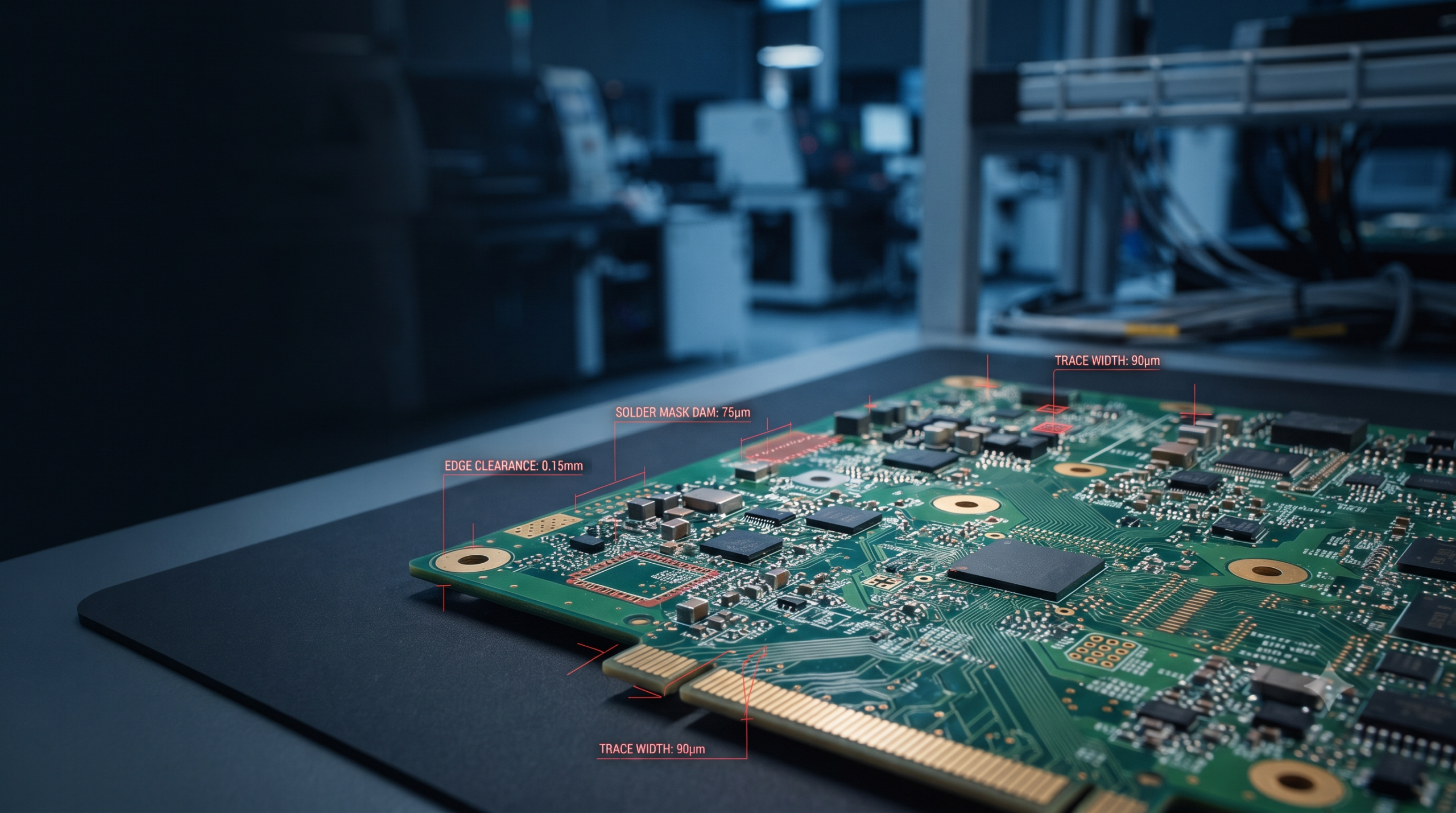
Design for manufacturability means aligning the design with the intended production process. It is not simply relaxing every dimension. Some applications need demanding features; the question is whether those features are necessary, controllable, inspectable, and compatible with the rest of the build.
Ask the manufacturer which dimensions are routine and which need special handling. Hole structures, spacing, registration, copper balance, and assembly access can create interacting constraints. Reviewing these before release is usually more useful than negotiating a concession after parts have already been ordered.
Yield connects engineering to economics
Yield describes how much production meets the defined acceptance requirements at a given stage. Low yield can increase material consumption, rework, queue time, and delivery uncertainty. It is therefore an engineering issue as well as a financial one.
A unit-price comparison is incomplete if suppliers are quoting different acceptance criteria, test coverage, documentation, or assumed volumes. Likewise, a successful prototype run does not establish stable volume production. Ask how the process will be monitored, how defects are classified, and what feedback reaches the design team when a pattern appears.
Components and traceability are part of the product
Board production depends on the availability and authenticity of components as well as fabrication capacity. An unavailable part can force a redesign; an unverified substitute can alter performance or reliability. Sourcing choices should preserve a clear record of what was purchased and where it came from.
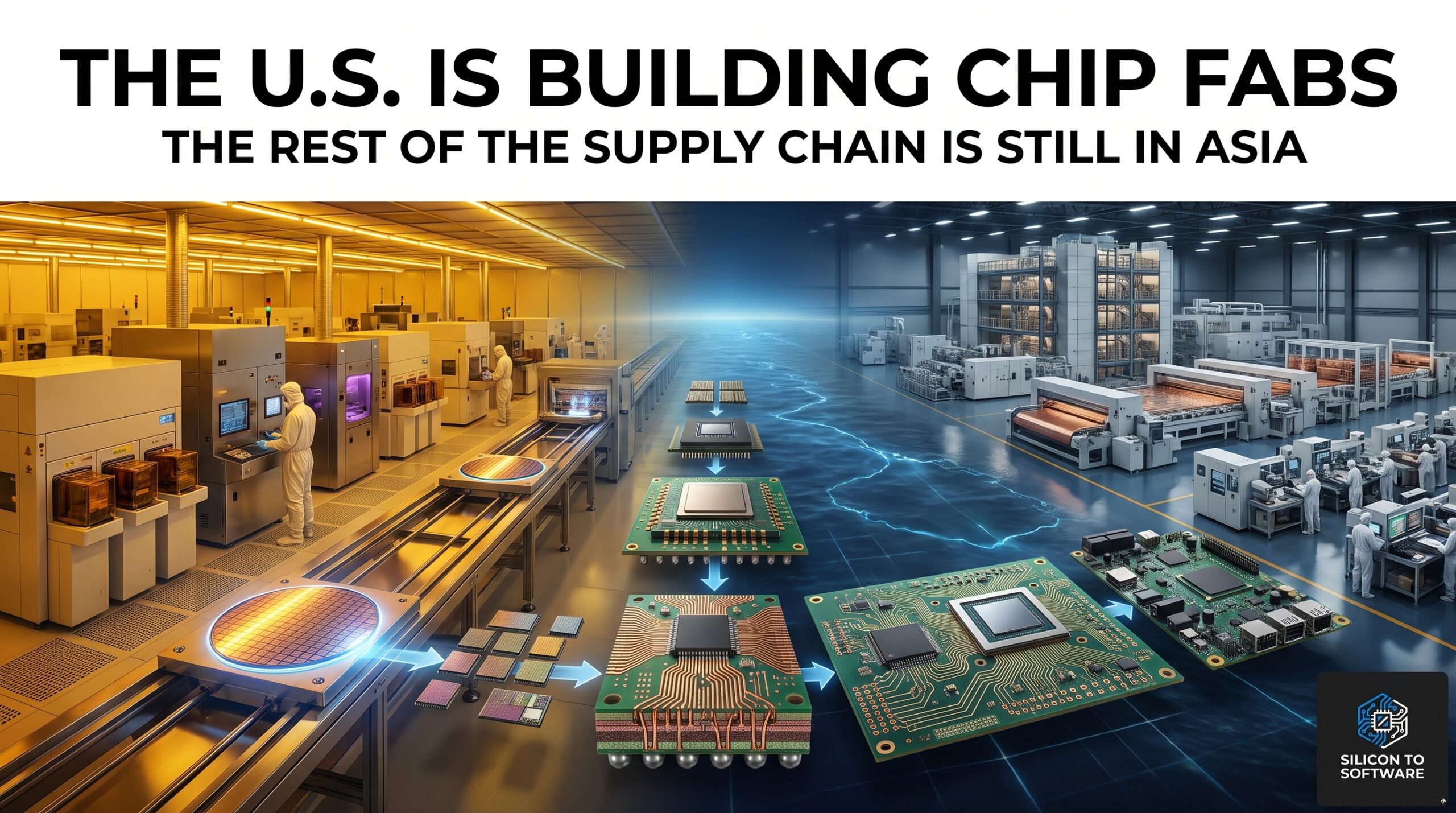
Counterfeit detection is not a single visual check. Procurement controls, traceability, supplier qualification, and appropriate inspection or testing work together. Supply-chain resilience also involves understanding upstream dependencies: a local board assembler may still depend on materials, packages, or components produced elsewhere. A geographic label alone does not describe the whole chain.
Start here: a curated reading path
- Start with practical DFM issues — Use these examples to prepare a design review that focuses on manufacturability before files become a production commitment.
- Understand alternative production routes — This adjacent design reading helps separate technologies that may look similar in a product concept but require different manufacturing assumptions.
- Examine component authenticity — Follow how questionable parts can enter a supply chain and why purchasing controls and verification need to work together.
- Look beyond the final factory — Read for the dependencies that remain even when one stage of electronics production moves closer to the customer.
- Connect boards with packaging capacity — This semiconductor reading shows why upstream assembly and substrate constraints can affect the electronics supply chain.
Put the ideas to work
Before comparing suppliers, create one shared requirements sheet covering revision control, stackup, finish, acceptance criteria, test scope, documentation, and approved substitutions. Ask each supplier to identify exclusions and assumptions. Resolving those differences makes the eventual price comparison much more meaningful.
Frequently asked questions
Is the cheapest quote necessarily the lowest-cost option?
No. Compare identical requirements and account for yield, rework, testing, logistics, and schedule risk. Different scopes can make headline prices misleading.
Does DFM guarantee a defect-free build?
No. It reduces avoidable design-process mismatches. Process control, materials, assembly execution, inspection, and testing remain necessary.
Why do prototype and production results differ?
Volumes, equipment, handling, component variation, and process controls can differ. A production plan should explicitly address what changes when the build scales.
Table of Contents
PCB Manufacturing Resources
-

Industrial IoT Hardware Reliability: Why Boards That Pass Lab Testing Still Fail on the Factory Floor
-
Why US Chip Fabs Alone Won’t Fix the Electronics Supply Chain
-
5 Common PCB DFM Mistakes That Can Reduce Fabrication and Assembly Yield
-

Choosing the Right High-Speed Laminate for AI Hardware: Megtron 6 vs. Megtron 8 vs. Tachyon 100G