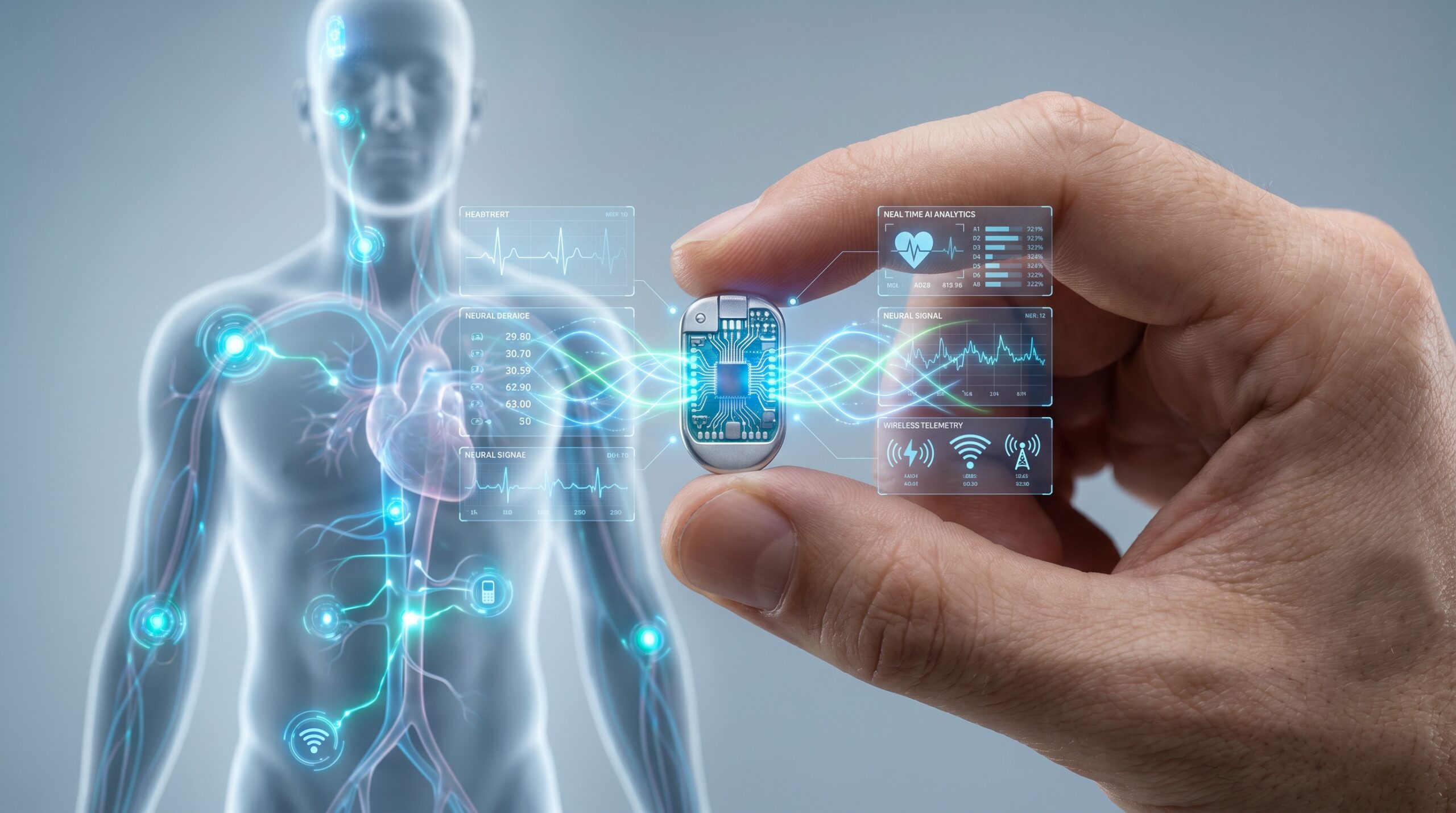
Implantable Medical Devices: 7 Breakthrough Truths That Will Change How You Think About Healthcare
All technical claims in this article have been verified against primary industry standards (MIL-STD-883, ISO 14708-7, IPC-2226, FCC Part 95), peer-reviewed literature, and official regulatory documentation. Sources are listed in the Verification section at the end of this article. This content is intended for informational and educational purposes only. It does not constitute medical advice. Readers making clinical, regulatory, or engineering decisions should consult qualified professionals and review primary source documentation directly.
Implantable medical devices are changing healthcare in ways most people never see. Let me start somewhere specific, because I think the detail hits harder than easing in.
Table of Contents
Imagine a woman in her late fifties. Tuesday morning. Coffee not done yet. A device the size of a grain of rice — under her skin for years — catches an abnormal heart-rate event, logs it, timestamps it, and transmits the information to her clinical team. She may feel none of it.
I’ve been in PCB sales and hardware for over twenty years, and implantable medical devices are the part of this industry that still genuinely surprises me. And I’ll be straight — most tech coverage skips the part I find most wild. Not the app. Not the cloud. The board. The chip. The seal that has to hold for ten years inside a human being. That’s what this piece is about.
What Even Are Implantable Medical Devices?
Quick baseline — I mean quick — before we go deep.
An implantable medical device (IMD) is any electronic system put inside the human body to watch, prod, or adjust what’s going on in there. Most people think pacemaker. Fine. That’s just the start.
The list today:
- Cardiac implantable electronic devices (CIEDs) — implantable cardioverter-defibrillators (ICDs) and cardiac resynchronization therapy (CRT) devices
- Implantable loop recorders (ILRs) — continuous cardiac monitoring
- Deep brain stimulators (DBS) — Parkinson’s, treatment-resistant depression
- Cochlear implants — sensorineural hearing loss
- Continuous glucose monitors (CGMs) — subcutaneous sensors
- Neurostimulators — chronic pain, spinal cord injury rehab
These categories aren’t engineering equivalents. A short-duration or replaceable sensor has very different packaging, power, and service-life requirements from a cardiac implant or DBS system designed to remain in the body for years. The same broad label — “implantable medical device” — can therefore hide very different requirements for hermeticity, reliability, power management, and materials.
Here’s what I think most people miss: what changed isn’t the list. It’s the scale, the smarts, and the connection. Modern IMDs run application-specific integrated circuits (ASICs), low-power Bluetooth Low Energy (BLE) radio stacks, and on-device inference engines doing machine learning at microwatt power budgets. Inside a human body. For years.
Not the same device class as a 1958 pacemaker. Not even close.
How an implantable medical device works: the signal path from biosensor to cardiologist dashboard.
Click any node to jump to that section. | Silicon to Software
I think most people — even people deep in tech — have no idea how far this has come. At the end of the day, that gap in awareness is kind of the whole reason I wrote this.
The Hard Part Nobody Talks About — Implantable Medical Device Engineering
I’m going to jump straight to a specific number, because I think it frames the rest better than any broad overview.
1 times 10 to the minus 8 cc per second.
That’s the helium fine-leak threshold an implantable device enclosure has to pass. Per MIL-STD-883 TM1014 (the Seal test method governing hermetic checks across military, space, and implantable medical device use) and ISO 14708-7:2013 (which mandates fine and gross leak tests for active implantable stimulator casings), the titanium shell around an IMD must pass a helium leak test at less than 1 × 10⁻⁸ cc/sec at STP. Tiny devices push down to 10⁻¹¹ cc/sec. There is no margin for leakage.
In my experience, until you sit with that number, the design problem doesn’t fully land. This device lives in saline. Enzymes. Ions. At roughly 37°C. Moving constantly. For a decade.
Now inside those sealed boxes — the PCB work. Engineers use High Density Interconnect (HDI) construction, governed by a stack of IPC standards: IPC-2226 (design rules, microvias under 150 µm, sequential build-up lamination types), IPC-6016 (HDI qualification), IPC-6012F (the current 2024 rigid board spec), and IPC-2221 (design fundamentals). Layer counts of 8–16 are possible. But here’s the thing — layer count is a bad way to measure what’s actually going on. Many modern IMDs are moving away from stacked PCBs entirely, toward System-in-Package (SiP), where the die, passives, and antenna all sit in one hermetic module. Far more density. Far less stacking.
Power is the next wall. Every design call flows from it.
The Battery Problem (And Why Engineers Lose Sleep Over It)
I know what you’re thinking. Just put in a better battery. Not that simple.
Most IMDs run on primary lithium cells. Non-rechargeable. When it dies, the patient goes back into surgery. Real infection risk. Real cost. Real disruption to a real human life. Not great.
Two paths forward: wireless energy harvesting and ultra-low-power design.
On the wireless side — inductive power via near-field communication (NFC) at 13.56 MHz has made transcutaneous charging real for some devices. Medtronic’s recharge-enabled neurostimulators use this. But tissue depth kills efficiency fast. Works near the surface. Go deeper; it gets ugly.
The more interesting angle — and I’ve noticed this gets under-covered relative to how important it is — is at the chip level. Semiconductor work at the 22nm FD-SOI (Fully Depleted Silicon-on-Insulator) node, specifically GlobalFoundries’ 22FDX platform (which the company documents at over 70% lower power versus 28nm HKMG via software-controlled body biasing), has pushed biosensing ASIC standby budgets into the sub-100 nW range. Academic work at comparable nodes has shown single-digit nanowatt designs. Exact figures depend on topology, body-bias point, and process corner — you’d need to check the target foundry PDK for production numbers.
Now — body-motion harvesting and thermoelectric harvesting from the skin-core temperature gap (typically 2–4°C) are both being explored. I’ve noticed tech coverage tends to treat these like they’re almost commercial. They’re not. As of 2026, IMDs running solely on those sources are rare. Most published work is still lab-stage — serious labs, MIT and ETH Zurich both — but labs. The gap between a proof of concept and a device that survives a decade inside a person is not small.
On the other hand, maybe I’m wrong about the timeline. This field has surprised me before. Consistently.
Biosensors: What’s Actually Being Picked Up
Right. Device is sealed. Has power. What does it sense?
Biosensors are the transducers at the biology-electronics edge. In implantable medical devices that perform continuous monitoring, biosensors provide the interface between the biological signal and the electronics. What they can read:
- Electrophysiology — neural action potentials, local field potentials (LFPs), electrocorticography (ECoG) in the microvolt-to-millivolt range, via platinum-iridium or tungsten microelectrode arrays
- Neurochemistry — dopamine, serotonin, glucose via amperometric or potentiometric electrodes with enzyme-functionalized surfaces
- Hemodynamics — intracardiac pressure, flow, oxygen saturation via MEMS pressure sensors and optical oximetry
- Temperature and pH — real-time state markers for post-surgical monitoring
Different sensing modalities can generate very different data rates — a temperature measurement may change relatively slowly, while an electrophysiology channel can produce a continuous waveform requiring substantially more data processing. That difference helps explain why edge processing can matter more for some implant classes than others.
Here’s what I think is underappreciated: the edge-processing shift. Instead of dumping raw data over the air — expensive in bandwidth and battery — newer IMD designs classify on-chip. A neural recording chip with embedded spike-sorting identifies neuron firing events locally, sends only the result. Not the raw wave. Radio-on time drops. And in my experience, radio-on time — not compute — is almost always what drains the cell. That surprises a lot of people.
BrainGate2 and Synchron’s Stentrode are both doing this in live clinical work now.
When the Device Adapts
I’ll be honest — this section is the one that still gets me, even after all the hardware I’ve seen.
The most advanced IMDs aren’t just sensors. They’re adaptive closed-loop systems. Measure a parameter, decide what it means, fire a response. Milliseconds. No human in the loop.
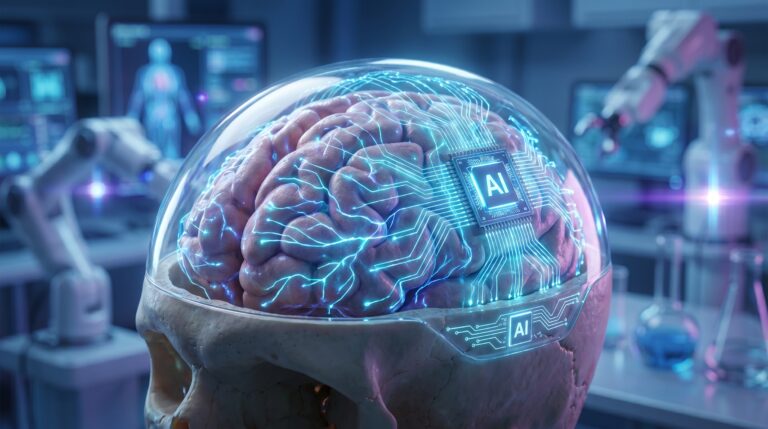
Best example: closed-loop DBS. Standard deep brain stimulation delivers constant pulses to brain targets — typically the subthalamic nucleus for Parkinson’s. Adaptive DBS does something different. Same electrode array, but now it’s also recording local field potentials. It listens for pathological beta-band oscillations — 13–35 Hz, a known marker of motor trouble — and adjusts stimulation in real time. No one at a keyboard making that call. The circuit handles it.
Medtronic’s Percept PC with BrainSense technology. Commercial proof point. Real LFP recording in an approved device.
Then there’s the UCSF work — and this one I think deserves more attention than it gets. Scangos, Chang, Krystal and colleagues, Nature Medicine, October 2021: closed-loop neuromodulation for treatment-resistant depression using an FDA-approved NeuroPace RNS System. Implanted electrodes watched amygdala gamma-band activity. When a patient-specific biomarker crossed a threshold, a 6-second pulse fired to the ventral striatum. On its own. To be precise: this is threshold detection, not ML inference on an embedded processor. But the architecture is the whole point. The device acts on what it hears.
A mental health intervention. Running inside someone’s skull. Firing on its own.
I’ve been in hardware long enough to be hard to impress. This still does it.
The Chemistry Bit You Can’t Skip
None of the above works if the device triggers an immune response. Full stop.
Biocompatibility is under ISO 10993 — a multipart standard covering cytotoxicity, sensitization, blood compatibility, genotoxicity, and long-term toxicity for anything touching living tissue. The approved materials list is tight by design. Titanium alloys. Medical-grade silicone elastomers (USP Class VI). Platinum-group metals for electrode tips.
Parylene-C conformal coatings are increasingly important for flexible electronics. Vapor-deposited at the molecular level, parylene-C gives you a thin (1–50 µm), near-pinhole-free moisture barrier at standard deposition thicknesses. Outperforms most standard coatings in wet environments long-term.
Polyimide (Kapton) and liquid crystal polymer (LCP) substrates are enabling conformable implants that match the mechanical feel of soft tissue — less foreign-body response. That flexibility also creates a manufacturing tradeoff — polyimide and LCP constructions can require different material handling, lamination, and interconnect processes than conventional rigid FR-4 builds, adding another layer of process control to an already demanding implant environment. I think this materials angle gets way less attention than it deserves outside specialist journals. Just a thought.
Getting Data Out — and Keeping It Safe
An implant that can’t talk isn’t useful. But RF through body tissue is lossy, power-hungry, and increasingly a security issue.
The MICS (Medical Implant Communication Service) band at 402–405 MHz is FCC-allocated for short-range IMD telemetry. The MedRadio service (47 CFR § 95.2563) extends that across non-contiguous bands: 401–406 MHz, 413–419 MHz, 426–432 MHz, 438–444 MHz, and 451–457 MHz. Data rates are modest — kilobits per second — but that’s enough for physiological data. BLE 5.x at 2.4 GHz is common for smartphone-connected devices. Inductive near-field coupling stays preferred for high-security sessions like device programming.
Now. Security. I want to talk about this directly.
Section 3305 of the Consolidated Appropriations Act, 2023 (signed December 29, 2022, effective March 29, 2023) amended the FD&C Act to require manufacturers of “cyber devices” to submit a software bill of materials (SBOM) — covering commercial, open-source, and off-the-shelf software components — in premarket submissions. Plus documented capability to push authenticated security patches post-market.
The guidance has moved fast since then. September 2023 → June 2025 → February 3, 2026 — each version superseding the last. The 2026 revision aligns with the Quality Management System Regulation (QMSR) that replaced the legacy QSR on February 2, 2026, harmonizing 21 CFR Part 820 with ISO 13485:2016.
If you’re a manufacturer still on the 2023 or 2025 guidance — don’t sweat it, but do update now. February 2026 is current. Billy Rios and others were showing real exploits in legacy IMDs a decade ago. The rules are finally where they should be.
Where It’s All Going
Fast. Honest answer.
BCIs — brain-computer interfaces — are the headline. Neuralink got FDA Investigational Device Exemption (IDE) approval in May 2023. First human implant in the PRIME study (Precise Robotically Implanted Brain-Computer Interface): January 2024, targeting motor paralysis from cervical spinal cord injury or ALS. Three participants had implants by mid-2025. First patient hit a real problem — electrode threads partially retracted, performance declined. Documented setback. Neuralink worked on it in later implants. Separately, in 2025, Neuralink got FDA Breakthrough Device Designation for speech restoration in severe speech impairment. Different indication from PRIME’s motor focus. Worth keeping those separate in your head.
Synchron’s first U.S. BCI implant: 2022. Different bet — an endovascular stent-electrode rather than an intracortical array. The engineering tradeoff is worth sitting with. Intracortical arrays can place electrodes much closer to individual neural signals, but they also introduce demanding challenges around implantation, electrode-tissue interfaces, packaging, and long-term signal stability. Synchron’s approach places the electrode array within a blood vessel rather than directly into brain tissue, changing the interface and the associated engineering constraints. The two architectures therefore make different tradeoffs between signal access, implantation approach, packaging, and long-term interface stability. It’s honestly a toss-up on which architecture scales better long-term. I don’t think anyone knows yet.
Bioresorbable electronics are the thing I keep watching. Implants that dissolve once they’re done — work from John Rogers’ group at Northwestern, published in Science and Nature Electronics — are moving toward real clinical use. Leading case right now is transient sensors for post-surgical wound monitoring. Sounds like science fiction. The materials science is already there.
Distributed IMD networks — coordinated implants across multiple body sites — are plausible as low-power wireless and miniaturized ASICs converge. Whether regulatory and surgical complexity ever allows it at real scale is genuinely an open question. I think it’s further out than most projections suggest. On the other hand, maybe I’m underestimating the pace again.
What It Means for You
You probably won’t need a brain implant. Just being honest.
But the shift from seeing a doctor twice a year to being continuously monitored by implantable medical devices is already touching most people. CGMs are mainstream for type 1 diabetics and increasingly used by type 2 patients and athletes. Implantable cardiac monitors are standard care for unexplained syncope and cryptogenic stroke workup. Not edge cases anymore.
The circuit board smaller than your fingernail isn’t a curiosity. It’s becoming infrastructure.
And unlike a drug — it doesn’t wear off.
Editorial & Medical Disclaimer
This article is produced for informational and educational purposes only. It does not constitute medical advice, clinical guidance, engineering specification, or legal counsel. The technical content covers publicly documented standards, regulatory frameworks, and peer-reviewed research as of the publication date.
Implantable medical device technologies, clinical trial statuses, and regulatory designations change frequently. Readers with clinical, engineering, procurement, or patient-care responsibilities should verify all information independently against current primary sources — including the FDA device database (MAUDE, 510(k) database), ClinicalTrials.gov, and the issuing standards bodies referenced throughout this article.
No compensation was received from any company, manufacturer, or organization mentioned herein.
About the Author
Imran Valiani | Sales Director, PCB Electronics Manufacturing
20+ years working with major Bay Area and global tech clients. Founder of Silicon to Software, where I write about the hardware layer — PCB fab, AI gear, autonomous systems, and cyber — the stuff most tech writers have never touched. Literally.
Follow: X @SiToSoftware | LinkedIn
This article was developed with AI assistance and edited, fact-checked, and reviewed by the author. See my full AI disclosure.
Note: Clinical trial status and regulatory designations are subject to change. Readers are encouraged to verify current status directly with the FDA device database (MAUDE, 510(k) database) and ClinicalTrials.gov.
Sources
| # | Source | URL |
|---|---|---|
| 1 | MIL-STD-883 TM1014 — DoD Test Method Standard, Seal | https://landandmaritimeapps.dla.mil/Programs/MilSpec/ListDocs.aspx?BasicDoc=MIL-STD-883 |
| 2 | ISO 14708-7:2013 — Active implantable medical devices, Part 7 | https://www.iso.org/standard/54472.html |
| 3 | IPC-2226 — Sectional Design Standard for High Density Interconnect | https://www.ipc.org/ipc-2226 |
| 4 | IPC-6012F — Qualification and Performance Specification for Rigid Printed Boards (2024) | https://www.ipc.org/ipc-6012 |
| 5 | IPC-6016 — Qualification and Performance Specification for HDI Layers | https://www.ipc.org/ipc-6016 |
| 6 | IPC-2221 — Generic Standard on Printed Board Design | https://www.ipc.org/ipc-2221 |
| 7 | GlobalFoundries 22FDX Platform | https://gf.com/technology-platforms/22fdx/ |
| 8 | ISO 10993 — Biological Evaluation of Medical Devices | https://www.iso.org/standard/68936.html |
| 9 | FCC 47 CFR § 95.2563 — MedRadio Frequency Bands | https://www.law.cornell.edu/cfr/text/47/95.2563 |
| 10 | Section 3305, Consolidated Appropriations Act, 2023 — Medical Device Cybersecurity | https://www.congress.gov/bill/117th-congress/house-bill/2617/text |
| 11 | FDA Cybersecurity in Medical Devices Guidance (February 3, 2026) | https://www.fda.gov/regulatory-information/search-fda-guidance-documents/cybersecurity-medical-devices-quality-management-system-considerations-and-content-premarket |
| 12 | FDA Quality Management System Regulation (QMSR) — effective February 2, 2026 | https://www.fda.gov/medical-devices/postmarket-requirements-devices/quality-management-system-regulation-qmsr |
| 13 | Medtronic Percept PC with BrainSense Technology | https://www.medtronic.com/us-en/healthcare-professionals/products/neurological/deep-brain-stimulation-systems/percept-pc.html |
| 14 | Scangos et al. — “Closed-loop neuromodulation in an individual with treatment-resistant depression,” Nature Medicine, October 2021 | https://www.nature.com/articles/s41591-021-01480-w |
| 15 | Neuralink PRIME Study — ClinicalTrials.gov (NCT06429735) | https://clinicaltrials.gov/study/NCT06429735 |
| 16 | Neuralink Breakthrough Device Designation — Speech Restoration (2025) | https://neuralink.com/updates/neuralink-receives-breakthrough-device-designation-for-speech/ |
| 17 | CNBC — Neuralink Thread Retraction Report (May 2024) | https://www.cnbc.com/2024/05/08/neuralinks-first-in-human-brain-implant-has-experienced-a-problem-company-says-.html |
| 18 | Synchron — First U.S. BCI Implant (2022) | https://synchron.com/news |
| 19 | John A. Rogers Research Group — Northwestern University, Bioresorbable Electronics | https://rogersresearchgroup.com |
| 20 | FDA MAUDE — Manufacturer and User Facility Device Experience Database | https://www.accessdata.fda.gov/scripts/cdrh/cfdocs/cfmaude/search.cfm |
| 21 | ClinicalTrials.gov | https://clinicaltrials.gov |